The Data Behind the News
The Data Behind the NewsArnab in Andhra: two dated wind observations, not a complete storm curve
NASA’s October29 account provides two wind estimates with different observation times. The chart preserves those dates and does not forecast the storm.
Pan India Pulse desk (AI-assisted research)Based on reports from NASA Earth Observatory, The New Indian Express
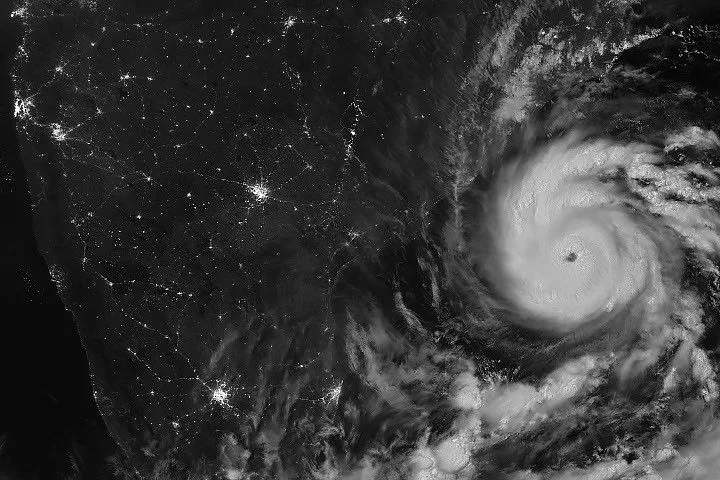
NASA Earth Observatory’s October29 account reports about 140 kilometres per hour at the October26 satellite-image time and 130 kilometres per hour at early October28 landfall. This extract retains two dated observations rather than filling the interval with invented values.
The first time is 20:12 UTC on October26, equivalent to 1:42am IST on October27. The landfall observation is dated early October28 without a precise time in this account. Both plotted values use kilometres per hour.
The arithmetic difference is 10 kilometres per hour. It is not an estimate of the storm’s peak, the rate of weakening or local rainfall. Andhra’s subsequent request for damage assessment, reported by The New Indian Express, concerns ground impacts that these two wind observations cannot quantify.
Two wind estimates quoted in NASA’s October29 account
October26 20:12 UTC and early October28, 2026 · km/h
| Label | Value |
|---|---|
| Oct26 20:12 UTC (approx.) | 140 |
| Early Oct28 landfall | 130 |
Source: NASA Earth Observatory; wind estimates attributed to IMD · Data checked as of 2026-10-29
Method: Transcribed the two sustained-wind estimates in NASA’s article. The first is approximate. UTC is retained in the first label; no interpolation, resampling or peak calculation. Difference checked: 140 minus 130 equals 10 km/h.
Limits: Two quoted observations, not a complete IMD time series. Different times; first value approximate; landfall time not specified precisely. Cannot infer wind at a household, rainfall, damage or future movement.
Download the plotted values (CSV) ↓What these numbers can tell us
Analysis by the Pulse deskTwo observations are not a continuous intensity record. The chart supports a comparison of the quoted values only; it cannot establish the highest wind at every locality or the condition of a particular road or home.
Your take
Do you agree with the Pulse view?
Sources
- Arnab Strikes India; October29 primary scientific account NASA Earth ObservatoryPrimary document
- Naidu briefs Shah and requests central teams The New Indian Express
This piece is analysis written only from the published reports listed above. Pan India Pulse does no original reporting. How this site works