Politics
Evening Pulse: Four drought-hit districts await relief measures starting November 1
Crop assistance, cattle support and rural work have different conditions; Tuesday’s reporting also details the Rabi water plan.
Pan India Pulse deskBased on reports from The Indian Express, TV9 Gujarati, The Times of Indiaગુજરાતીમાં વાંચો
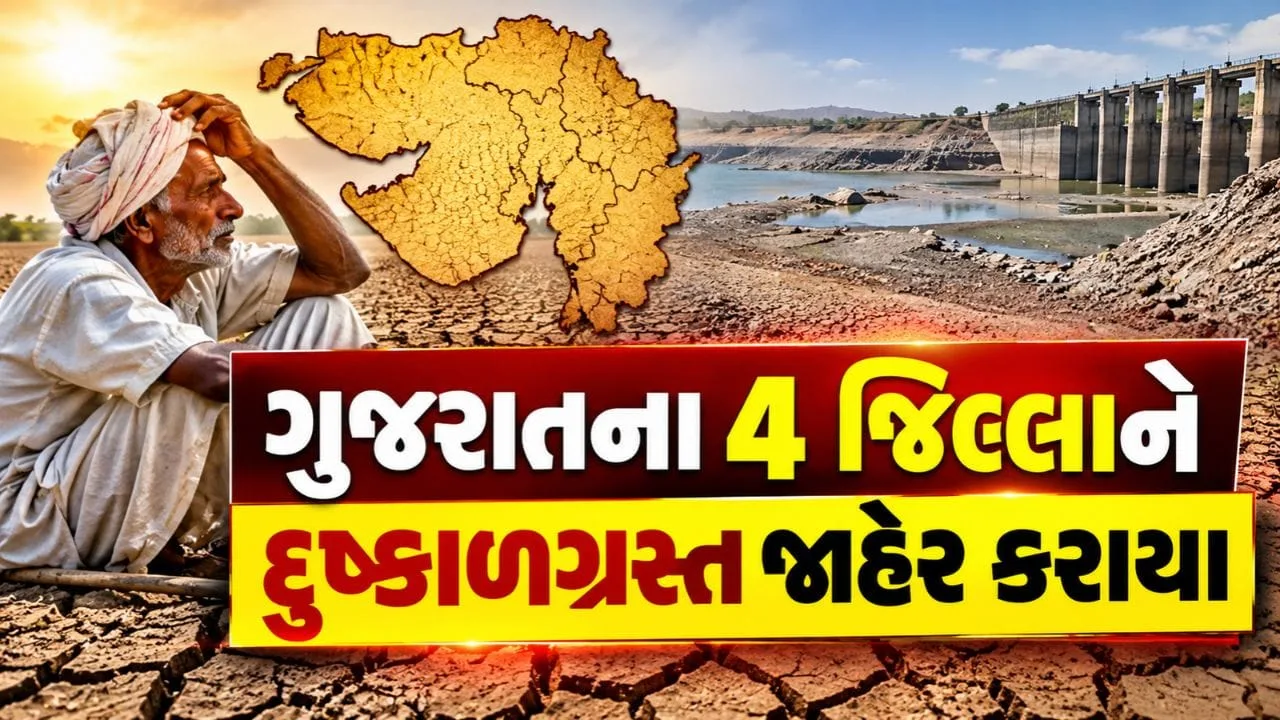
Gujarat’s drought declaration for Devbhumi Dwarka, Porbandar, Jamnagar and Kutch now comes with a November 1 start date for the announced relief measures. Tuesday’s Indian Express report places that date against Chief Minister Bhupendra Patel’s Monday announcement, while TV9 Gujarati independently reports the four-district decision and assistance package. No inspected evening report establishes that the new crop payments have already reached beneficiaries. This remains a transition from declaration to delivery.
The crop-loss assistance announced by the chief minister is ₹8,500 per hectare, limited to two hectares. The ceiling therefore corresponds to ₹17,000 under that rate, subject to the scheme’s eligibility and assessment. The amount is an announced entitlement framework, not a universal payment to every resident of a drought-declared district. Farmers still need the official local instructions governing assessment and access; this edition does not invent an application portal, documentary requirement or deadline absent from those instructions.
Cattle support is a separate part of the package. The Indian Express describes assistance of ₹80 per animal per day for animals in cattle camps in the declared talukas, initially from SDRF funds for two months. TV9 also reports the cattle-support rate. The camp and location conditions matter: this is not evidence that every livestock owner can already collect an unrestricted cash payment. The state also describes subsidised fodder arrangements, which should be distinguished from the newly announced crop-loss assistance.
The package includes provision for 150 days of employment in drought-affected talukas, according to the Indian Express and TV9. November 1 is the stated point from which the decision and relief measures take effect. A provision for work and an actual work allocation are different administrative stages. Local lists of available works, dates and payment arrangements would make the announcement useful to households whose income has fallen. No inspected record provides a completed district-by-district account of that delivery tonight.
The Indian Express and the Times of India add detail to the water-management context. The government plans Rabi irrigation from the command areas of 76 dams, with drinking-water reserves prioritised through June 30, 2027. The proposed one-to-four irrigation rotations depend on water availability; they should not be read as a guarantee of four releases everywhere. A dam-specific release schedule would tell farmers more about their own next crop than the statewide total alone.
The Times of India also records Gujarat Kisan Congress president Pal Ambaliya demanding a higher crop-assistance amount. The government points to the announced package and existing fodder distribution. That leaves two distinct questions for public scrutiny: whether the rates are adequate and whether eligible households actually receive the announced assistance.
The evening position is consequently more specific about the announced relief channels and water plan, rather than a newly verified settlement with another state or completed relief payments. The four districts cannot be understood from a single statewide rainfall average, and the different household needs cannot be met by a single headline amount. November 1 and the local implementation records are the next decision points. The drought declaration creates obligations that can be followed without assuming in advance either success or failure.
Political Alignment Lens
Article framing only. This does not establish publisher affiliation, reader beliefs or voting intent.
Pulse view
Analysis by the Pulse deskThe four-district declaration is geographically targeted, but the package contains several different routes to assistance: crop-loss support, cattle camps, fodder and work. Publishing each route’s local conditions would help residents identify what actually applies to them. A general announcement cannot answer those household-level questions.
The Rabi plan also makes the trade-off explicit: irrigation rotations depend on available water while drinking supplies receive priority through June 2027. Will district disclosures show both the relief reaching people from November 1 and the water available for the crops they are being asked to plan?
What to watch
- Official taluka-level instructions before the November 1 relief start.
- Work allocations, cattle-camp arrangements and verified payment records.
- Dam-specific Rabi release schedules and drinking-water reserves.
Your take
Do you agree with the Pulse view?
Sources
- Four districts declared drought-affected; relief and Rabi plans The Indian Express
- Drought declaration and relief rates TV9 Gujarati
- Drought package and conditional Rabi irrigation plan The Times of India
This piece is analysis written only from the published reports listed above. Pan India Pulse does no original reporting. How this site works