Politics
Afternoon Pulse: Chandrababu Naidu orders cyclone preparedness in Andhra Pradesh
Control rooms, mobile alerts, boats and power restoration are priorities as IMD retains October 27–28 coastal rain warnings.
Pan India Pulse deskBased on reports from The New Indian Express, ANI / WebIndia123, India Meteorological Department
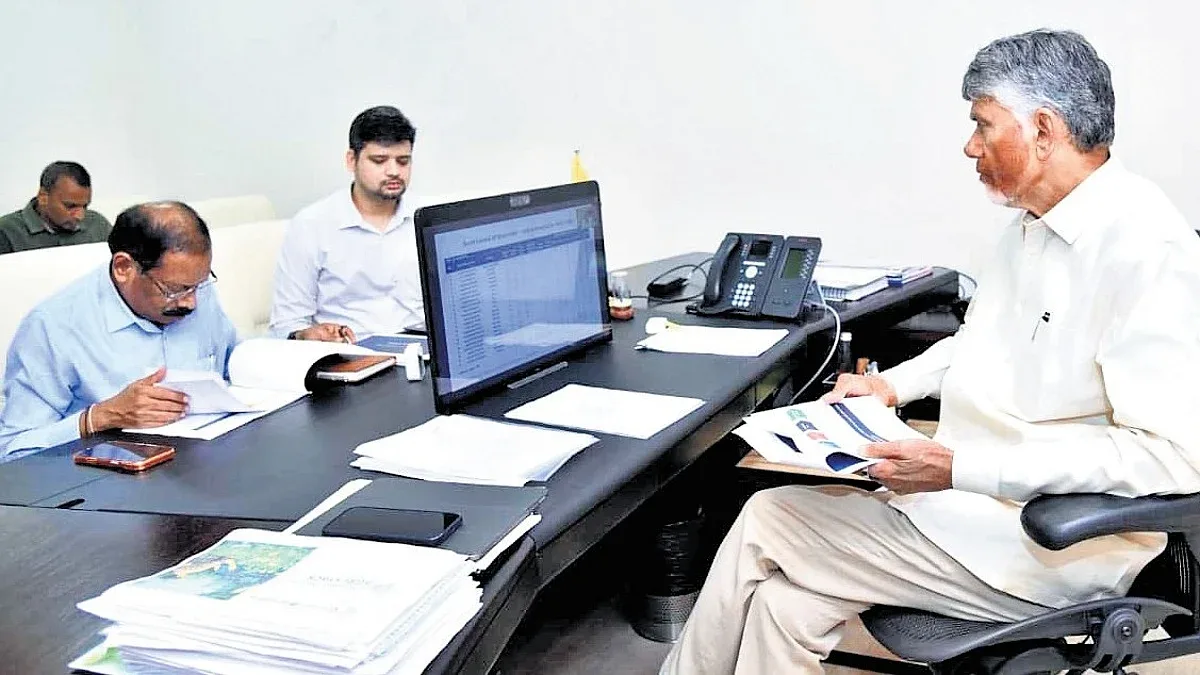
Andhra Pradesh Chief Minister N Chandrababu Naidu has ordered departments and district administrations to remain on round-the-clock alert ahead of the approaching Bay of Bengal storm. The New Indian Express’s October 26 report describes Sunday’s preparedness review, including instructions to establish control rooms and send regular public alerts. The IMD’s current subdivision warning continues to list extremely heavy rain for Coastal Andhra Pradesh on October 27 and 28. Those dated warnings, rather than an assumed landfall already under way, frame Monday afternoon’s position. ANI separately reports the coordination and control-room instructions, although it dates the review to Monday rather than Sunday; the precise meeting date differs between the accounts.
Since the morning Pulse, the useful additional detail is the administration’s list of tasks. Naidu directed departments to coordinate their work, keep coastal residents informed and persuade people to move where official advisories require it. He asked for cyclone bulletins every four hours, according to the Express account. A direction to establish a service is distinct from confirmation that every district has already staffed it; the next district notices and operating arrangements will show how the instructions are being carried out.
Electricity restoration received particular attention. Naidu told the Electricity Department to prepare for strong winds and restore supply promptly if disrupted. He also directed officials to ensure that boats at sea returned to shore. These are preparedness instructions, not reports that all boats have returned or that a particular town has already lost electricity. For coastal households, the relevant official information will be the local advisory, the applicable time window and any evacuation or service notice for their own location.
The review also addressed access to medical care. The Express reports instructions to shift pregnant women to hospitals in advance where transport and communication could be disrupted. That gives the preparedness programme a specific public-service dimension beyond a general warning about rain. It does not establish that every affected person has been moved. District-level accounts of transport, hospital coordination and continuity of care would provide more useful evidence than another aggregate assurance about readiness across the state.
The fresh IMD page differentiates Coastal Andhra Pradesh from Rayalaseema. Tuesday and Wednesday carry the extremely heavy rainfall warning on the coast. Rayalaseema’s entries instead list thunderstorms, lightning or squally conditions and strong surface winds during the same period. The warning categories should not be flattened into one identical statewide forecast. The page also carries a coastal heavy-rain warning for October 29. It is a forecast calendar, subject to subsequent bulletins, rather than an observation of rain already measured in each district.
The Express’s review report includes projected storm intensity, wind speeds and an October 28 coastal crossing corridor. Those projections originated in the reviewed briefing and can change as newer cyclone bulletins appear. This afternoon edition therefore does not turn an older projected centre or speed into a freshly verified position. The checked overlap is the approaching severe-weather risk and the October 27–28 rainfall concern. A current cyclone bulletin is needed before sharpening the landfall account.
Monday leaves district administrations with a concrete preparation agenda: warnings, control rooms, medical access, boats and power response. The evidence available does not justify a blanket school closure, a fixed evacuation total or a declaration that essential services are secure. Each would require its own current notice or verified operational report. The next meaningful development is a district decision or an updated meteorological bulletin, not a repetition of the same statewide instruction.
Political Alignment Lens
Article framing only. This does not establish publisher affiliation, reader beliefs or voting intent.
Pulse view
Analysis by the Pulse deskThe official warning and the administrative review answer different questions. IMD identifies forecast hazards and dates; district authorities organise local services and issue location-specific directions. Readers need both, with their actual issue times.
Naidu’s instructions are concrete enough to check against subsequent district action. A changed storm track would alter the geographical response, while verified staffing and service arrangements would demonstrate progress. Which districts will publish the clearest usable information before the heaviest forecast rain arrives?
What to watch
- The next IMD cyclone bulletin and district rainfall warnings.
- District control-room, evacuation and local service notices.
- Verified updates on boats, hospital access and electricity preparations.
Your take
Do you agree with the Pulse view?
Sources
- Naidu orders 24x7 cyclone preparedness The New Indian Express
- Naidu directs preparedness and control rooms ANI / WebIndia123
- October 26 subdivision warnings India Meteorological Department
This piece is analysis written only from the published reports listed above. Pan India Pulse does no original reporting. How this site works