Explainer
Morning Pulse: Hazira’s submarine milestone starts the next test
The indigenous energy module moves into Phase-2 activity; integration remains a later target.
Pan India Pulse deskBased on reports from Ministry of Defence / PIB, The Weekગુજરાતીમાં વાંચો
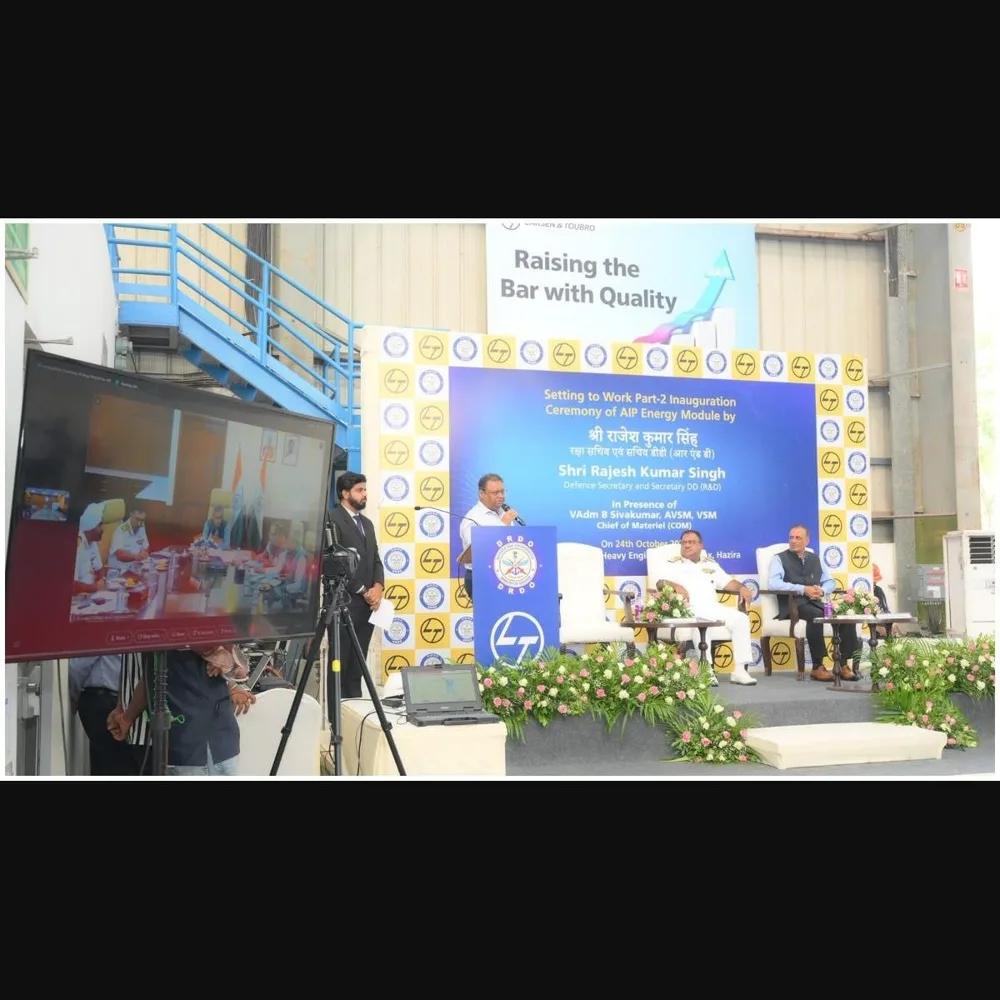
Gujarat’s fresh Sunday morning industrial story comes from Hazira, where a defence-energy programme has reached a new testing-stage milestone. The defence ministry’s October 24 release reports the inauguration of Setting to Work Phase-2 activity for an indigenous Air Independent Propulsion energy module at L&T’s AM Naik Heavy Engineering Complex. The Week’s Saturday evening report corroborates the announcement. It is a specific development beyond the unresolved CNG-relief discussion in our previous state Pulse.
The module was developed by DRDO’s Naval Materials Research Laboratory for conventional submarines. The stated purpose is to increase their underwater endurance by reducing dependence on atmospheric oxygen. That explains the programme’s significance without supplying an unsupported number of additional submerged days. The inspected records contain no verified operational endurance measurement for an installed fleet system, so this desk does not manufacture one.
The release is clear about what comes next: energising the module for power production, rigorous testing under Navy protocols and handover to Mazagon Dock Shipbuilders Limited before integration into a Kalvari-class submarine. Early 2027 is the stated integration target. It is not a completed deployment, a guaranteed deadline or proof that every acceptance requirement has already been met. A factory-stage milestone and a system operating at sea are different stages of evidence.
Hazira’s role also illustrates how a local industrial site can contribute to a national technical programme. The official account identifies collaboration among the laboratory, industry and Navy. It does not quantify newly created Gujarat jobs, local procurement value or future export orders. Those could become relevant economic questions, but attributing numerical benefits now would go beyond the record. Participation in a strategic programme is meaningful without inventing a local multiplier.
The defence ministry also stresses the safety culture required for hydrogen and fuel-cell systems. That is a reason to take the testing sequence seriously rather than judge progress by ceremony alone. This article gives no technical operating instructions or claim that a launch event certifies all future performance. The next checkable milestones are acceptance, handover and integration, with their own official records and dates.
The consumer-cost story has not been erased by the defence announcement. This morning’s inspected evidence establishes no new CNG reduction or completed relief measure, so yesterday’s demand is not repackaged as today’s concession. The useful addition is a newly documented industrial stage and a transparent account of what remains unfinished. Readers can follow that sequence without mistaking aspiration, testing and operational readiness for interchangeable achievements.
What could happen next
Analysis by the Pulse deskIf power-production tests satisfy Navy requirements, handover and integration can become the next reported stages. A revised timetable or further testing would need a specific explanation; the announcement alone cannot settle future performance.
Routine engineering gates offer a serious explanation for staged publicity. Neither the ceremony nor its timing establishes deception. What evidence should the public expect before describing a locally built strategic system as operational?
What could happen next
Conditional scenarios based on current reporting, not confirmed plans or election forecasts.
If required tests succeed, the module can advance towards handover and integration.
The ministry places testing before handover and targets integration in early 2027.
Watch for: Navy acceptance, handover and integration records. Reporting behind this scenario
What they are saying
The AIP system boosts the underwater endurance of the diesel-electric submarines by reducing its dependence on atmospheric oxygen.
What to watch
- Power-production and acceptance-test updates.
- Handover to Mazagon Dock and integration records.
- Any separately documented CNG relief decision.
Your take
Do you agree with the Pulse view?
Sources
- Indigenous AIP energy module begins Setting to Work Phase-2 Ministry of Defence / PIBPrimary document
- Indian Navy’s submarines to get major upgrade as indigenous AIP system enters testing phase The Week
This piece is analysis written only from the published reports listed above. Pan India Pulse does no original reporting. How this site works