Politics
Evening Pulse: Poland talks move from the programme to the delivery test
Modi and Tusk have held talks; the next test is what the cooperation agenda produces in identifiable work.
Pan India Pulse deskBased on reports from Moneycontrol, Aaj Takहिन्दी में पढ़ें
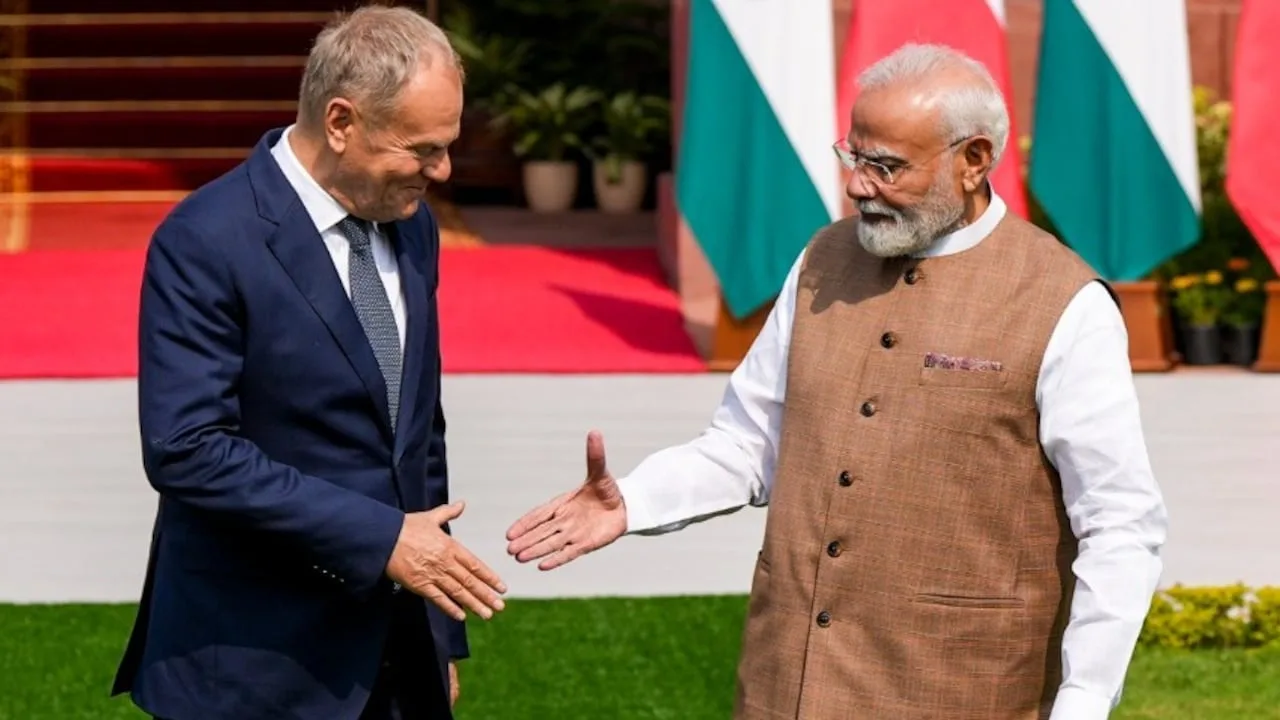
India ends Thursday with a diplomatic event that the afternoon edition could only describe as scheduled. Narendra Modi and Polish Prime Minister Donald Tusk have held bilateral talks in New Delhi. Moneycontrol and Aaj Tak both report the meeting at Hyderabad House and the emphasis on strengthening cooperation. This advances the visit story beyond the programme preview without establishing that every proposed partnership has become an executable project.
The reports identify defence, technology, space and trade among the areas discussed. Moneycontrol also reports Modi’s announcement of cooperation in nuclear energy. These are statements of the leaders’ priorities. The distinction matters to readers assessing the result: political agreement on a sector does not by itself reveal a contract’s value, the procurement route, a delivery date or the obligations of a named company.
The next local connection is Bengaluru. Both accounts place Tusk’s engagement with information technology and space-sector representatives there on October 23. That remains tomorrow’s programme. A business delegation creates an opportunity to connect diplomatic priorities with firms that can do the work, but its presence does not establish that an investment has been approved or that employment has already been created.
The visit builds on the strategic partnership established in August 2024, a dated background fact in both reports. That history explains why the language of closer cooperation recurs. It also sharpens the accountability question: a relationship described as strategic should be assessed through what institutions are asked to deliver, rather than through the warmth of the public remarks alone.
For businesses, the useful follow-up is a named opportunity with a defined process. For the public, it is clarity about which decisions involve public resources and which remain commercial proposals. The reviewed accounts support the completed meeting and its stated agenda; they do not supply enough detail to calculate a jobs total, an investment return or a defence capability delivered by this evening.
The day therefore closes with a clearer sequence than it began: talks have happened, priorities have been stated, and the Bengaluru engagement is still ahead. The next meaningful report should identify an actual instrument or implementation step. That would let readers distinguish a new commitment from an earlier aspiration repeated during a successful diplomatic visit.
For the national desk, the measurable change from the afternoon is confirmation that the leaders met. The remaining accountability questions concern execution. Any later agreement should be read for its scope and conditions before the desk describes it as a delivered benefit.
Political Alignment Lens
Article framing only. This does not establish publisher affiliation, reader beliefs or voting intent.
Pulse view
Analysis by the Pulse deskThe desk’s reading is that today’s achievement is movement in the relationship, with implementation still to be demonstrated. Sector announcements can be valuable when they open a concrete route for cooperation; their value cannot be measured solely by the number of subjects mentioned.
Tomorrow’s business conversations offer a practical place to test the agenda. Which named partner, document and next action will show readers that the diplomatic priorities are becoming work?
What to watch
- October 23 Bengaluru programme and any dated change to it.
- Named implementing partners and published agreements.
- Project terms, permissions and delivery responsibilities.
Your take
Do you agree with the Pulse view?