Politics
Morning Pulse: Rajnath Singh seeks a defence technology roadmap at Delhi seminar
At the Navy’s Swavlamban seminar in Delhi, the defence minister sought advanced technology and a timed roadmap.
Pan India Pulse deskBased on reports from Ministry of Defence / PIB, PTI / The Economic Times, The Times of India, National Herald (Congress-associated)Updated 27 October 2026, 8:35 am ISTहिन्दी में पढ़ें
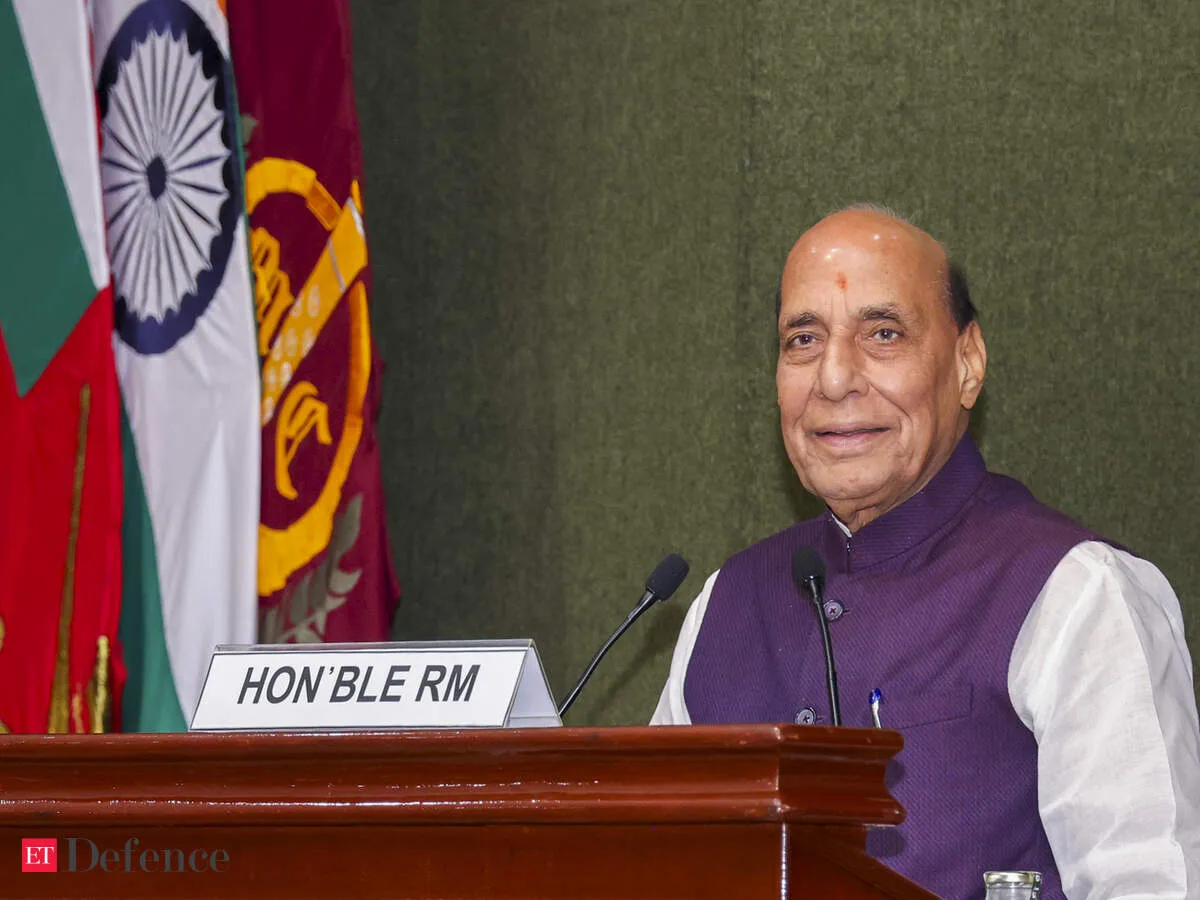
Defence Minister Rajnath Singh called for a second phase of defence self-reliance at the Navy’s Swavlamban seminar in New Delhi on Monday, October 26. His emphasis was on advanced technology, affordability and reliable supply chains, rather than simply increasing the number of products made domestically. The Defence Ministry’s release and PTI’s account in The Economic Times corroborate the speech. The fifth edition of the seminar runs at the Manekshaw Centre on October 26 and 27, making the next day’s discussions the immediate national policy follow-up.
Singh asked for a roadmap identifying the technologies India needs, the industries that would develop them, the resources required and deadlines for reducing dependence. The ministry’s account describes raw materials such as rare earth elements and unavailable domestic technologies as continuing constraints. It also acknowledges that some foreign dependence may remain until alternatives are developed. This matters to suppliers as well as the armed forces: a declaration of self-reliance is not itself a manufacturing schedule, and a domestic assembly line may still need components from abroad.
Research funding was another concrete part of the address. Singh urged consideration of mechanisms that can support risky research and greater private participation, alongside lower-cost experiments. The ministry reports his argument that failure is part of innovation, including in countries with established research systems. For Indian start-ups and universities, the immediate question is which procurement and funding arrangements will let an unsuccessful prototype inform the next attempt. The speech did not announce that every proposed funding mechanism had already been approved or opened for applications.
The Navy’s innovation programme supplies a useful distinction between ideas, contracts and equipment in service. The ministry says more than 4,000 proposals were submitted against 229 naval challenges. It also reports 25 contracts worth more than ₹1,900 crore and approvals in 41 cases worth more than ₹3,500 crore. These are different stages and overlapping measures, not separate sums to be added into a procurement total. A proposal is not an order, and an approval is not proof that a system has entered operational use.
Navy Chief Admiral Krishna Swaminathan stressed the conversion of innovation into usable capability, according to both the official account and PTI. The discussions cover artificial intelligence, autonomous systems and other emerging technologies. Vice Admiral Ajay Kochhar’s opening remarks, reported by PTI, also focused on shortening the route from innovation to integration. The shared concern is time: an idea can lose its advantage while moving through development and acquisition. Neither account establishes that a new acquisition deadline has already become binding on every participating organisation.
Singh also proposed a roadmap for technologies serving civilian and military needs and encouraged common applications across the services and Coast Guard. The official release records an exhibition with more than 100 start-up and MSME stalls, and the release of naval priority documents. Those documents can help firms understand the Navy’s stated requirements. They do not give every exhibitor a contract or validate every product on display. The distinction is especially relevant when ceremonial announcements become shorthand for completed industrial or operational gains.
Tuesday’s coverage will therefore follow the seminar’s concluding discussions, published requirements and any specific procurement or research decisions. Monday’s opening is a new development after the previous Pulse’s Sultanpur court coverage, not a revision of that verdict. The defence story has its own practical stakes: who carries research risk, which imported components remain critical, and how quickly approved projects reach users. A documented decision naming an agency, budget and timetable would move it beyond the broad policy direction set out in the speech.
Separately, Rahul Gandhi urged Delhi traders to press Narendra Modi to remove Chief Election Commissioner Gyanesh Kumar, saying the protests would then stop. The Times of India and Congress-associated National Herald report the response to traders seeking a delay to the November 1 rally. His electoral-fraud allegations remain claims; the statement does not establish the prime minister’s legal power to act as requested.
Police also formed a three-member SIT on Monday to examine the collision involving vehicles trailing Gandhi’s convoy in Sultanpur. Hindustan Times and ANI describe the police release: the inquiry covers causes, security, escort arrangements and traffic management. Its formation is a new procedural step, not a finding that a security lapse or deliberate act caused the collision.
Political Alignment Lens
Article framing only. This does not establish publisher affiliation, reader beliefs or voting intent.
Pulse view
Analysis by the Pulse deskThe minister’s proposed roadmap could make defence self-reliance more measurable if it names dependencies and dates rather than treating domestic production as a single achievement. Publishing the stages from prototype to operational acceptance would also help distinguish genuine progress from repeated announcements.
There is a serious trade-off between moving faster and validating equipment properly. A long development cycle can reflect legitimate engineering work, as well as administrative delay. Which forthcoming document will show how the Navy plans to shorten that cycle while retaining operational scrutiny?
What could happen next
Conditional scenarios based on current reporting, not confirmed plans or election forecasts.
If the ministry converts the speech into a roadmap, suppliers could receive clearer priorities.
Singh explicitly called for technologies, industries, resources and timelines to be identified.
Watch for: A dated roadmap naming responsible agencies and milestones. Reporting behind this scenario
If the roadmap remains under discussion, existing project stages remain the usable record.
The release distinguishes proposals, approvals and signed contracts.
Watch for: New procurement documents or verified induction announcements. Reporting behind this scenario
What they are saying
there is a need to prioritise critical areas for indigenisation
What to watch
- The seminar’s concluding decisions and released requirement documents.
- Any published technology roadmap with funding and deadlines.
- Contract and induction records for named innovation projects.
Your take
Do you agree with the Pulse view?
Sources
- Swavlamban 2026: minister’s address and programme Ministry of Defence / PIB
- Rajnath describes second phase of defence self-reliance PTI / The Economic Times
- Rahul’s response to Delhi traders The Times of India
- Traders’ request and Rahul’s response National Herald (Congress-associated)
- Police form SIT to examine convoy collision Hindustan Times
- Police release and inquiry terms ANI / Webindia123
This piece is analysis written only from the published reports listed above. Pan India Pulse does no original reporting. How this site works