Business
Afternoon Pulse: Bengaluru meeting replaces yesterday’s diplomatic preview
The reported Tusk–Shivakumar encounter is a step forward; local contracts need separate evidence.
Pan India Pulse deskBased on reports from ANI / The Tribune, PMIndia, PTI / Rediff
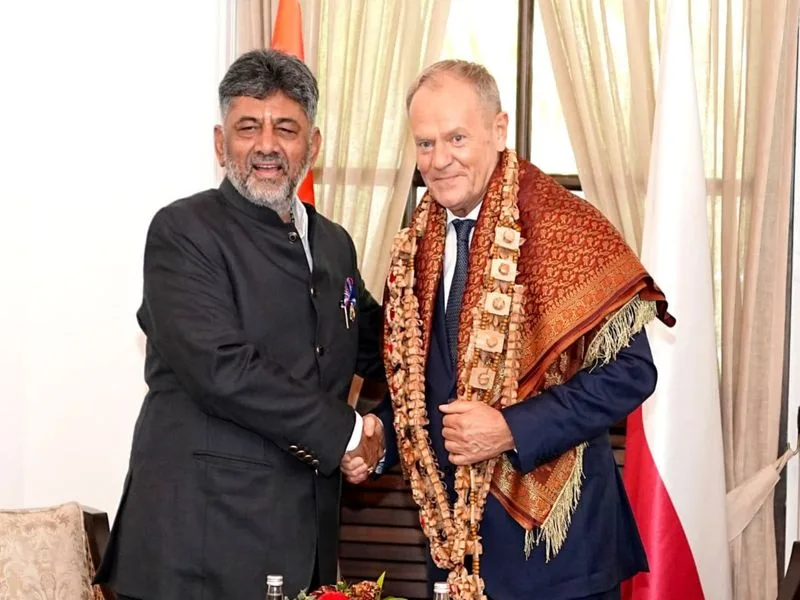
Karnataka’s afternoon brings the development yesterday’s evening desk was waiting for: a report that Polish Prime Minister Donald Tusk met state leader D.K. Shivakumar in Bengaluru. ANI’s account, published by The Tribune at 11:02 IST on October 23, places the visit in the state rather than merely on tomorrow’s programme. It describes interest in collaboration, not completed delivery of every proposal. PTI’s October 23 account, carried by Rediff, independently reports the encounter and attributes its account of the business discussions to a state government release.
For local businesses, that difference is the core of the story. A meeting creates a setting in which companies and institutions can discuss work. It does not disclose the terms on which a particular Karnataka firm might participate. The useful evidence after the meeting would be a named partner and a specific activity, followed by a timetable that can be checked later.
The October 22 India–Poland joint statement is the dated national context. It encourages cooperation in technology and innovation, among other fields. This helps explain why Bengaluru matters to the visit. It cannot establish which local organisation has received an order, or how much employment a possible collaboration would create. Such outcomes need their own records rather than extrapolation from diplomatic language.
The desk’s analysis is that the quality of a partnership depends partly on whether its route is visible to participants beyond the meeting room. A smaller company needs a process it can understand. A research institution needs a defined question and counterpart. Workers need an identifiable project before a promise can be assessed as a source of employment. These are tests for future reporting, not claims that the meeting has already answered them.
Yesterday’s Pulse asked whether the national visit would connect with Karnataka through actual participation. Today’s report supplies evidence of the state-level encounter. The next threshold is different: showing what the participants have undertaken to do. Keeping those stages separate avoids treating an invitation as acceptance, a proposal as approval, or an expression of interest as a funded project.
The afternoon therefore advances the visit’s chronology without publishing uncorroborated investment or jobs totals. It also leaves unrelated domestic issues on their own evidence. No cane settlement or factory restart is established by these diplomatic sources. Karnataka readers deserve an account that recognises the new meeting and still asks for the documents that would make its local consequences measurable over time. For local readers, a follow-up should also distinguish a state facilitation role from a company decision. Public support can help an engagement proceed, while a business still has to determine its own commitments and disclose them.
Pulse view
Analysis by the Pulse deskBengaluru’s role is now supported by a reported encounter. The harder work is specifying what follows for institutions and firms that were not represented at the top table.
A public route into the cooperation would make the opportunity easier to assess. Which Karnataka participant will identify a task, counterpart and implementation date first?
What to watch
- Published Karnataka-linked commitments.
- Named institutional and commercial partners.
- Separate evidence for investment and employment claims.
Your take
Do you agree with the Pulse view?
Sources
- Bengaluru meeting reported October 23, 11:02 IST ANI / The Tribune
- India–Poland joint statement, October 22 PMIndiaPrimary document
- October 23 state meeting and proposed investment; attributed to CMO release PTI / Rediff