Politics
Morning Pulse: Cane-price talks in Karnataka end without a decision
Growers pressed for higher payments in Belagavi; Shivakumar asked them to allow crushing while talks continue.
Pan India Pulse deskBased on reports from The New Indian Express, IANS / City Air Newsಕನ್ನಡದಲ್ಲಿ ಓದಿ
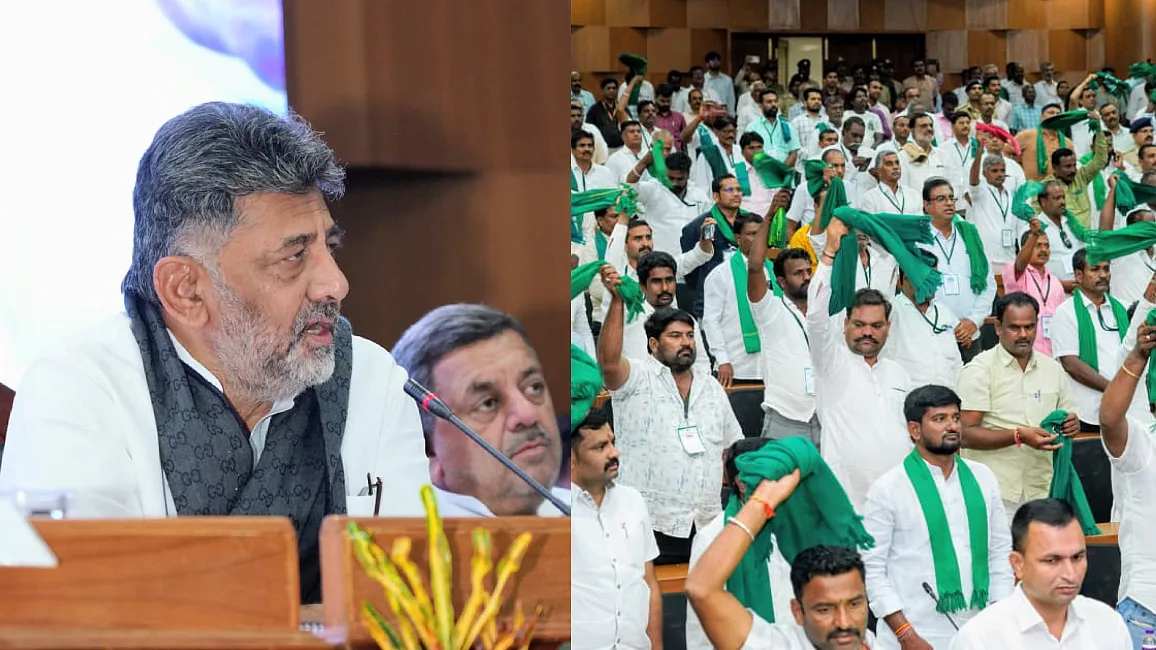
Monday’s Belagavi talks ended without a decision on Karnataka’s sugarcane price dispute. Chief Minister D K Shivakumar heard factory owners and growers at Suvarna Soudha, then appealed for crushing to begin while further discussions take place. The New Indian Express and IANS, carried by City Air News, independently describe the consultations and the absence of an immediate settlement. This closes the question left open in the afternoon Pulse, which reported the meetings beginning. A meeting took place; an agreed new price did not emerge from it.
The New Indian Express reports growers demanding ₹1,000 per tonne as a State Advised Price addition, alongside a purchase price of ₹4,500 per tonne. These demands should be kept distinct from the Union government’s Fair and Remunerative Price and from the minimum selling price of sugar discussed by factory owners. They refer to different parts of the production and pricing chain. Combining them carelessly would create an invented payment promise. No farmer should read the meeting report as an order that factories must already pay a newly agreed rate.
Shivakumar said the state could not take a lasting decision without the Centre and factory owners, and referred to a Union government committee expected in Karnataka on October 29. IANS reports him saying there would be further discussions after consultations with officials, the committee and factories. The New Indian Express headline also points to another meeting with farmers on October 29. The secure common point is that the process continues around the committee visit; this Pulse does not supply a confirmed venue, invitation list or final timetable beyond the reported accounts.
The chief minister linked the difficulty of granting the requested increase to drought, electricity costs and the state’s finances. Those are the government’s reasons for seeking time, rather than an independently audited finding that no alternative package is possible. IANS reports his concern that cane could move to Maharashtra if crushing does not begin in Karnataka. That gives the appeal a concrete economic setting: growers want an adequate price, factories need supplies and the state wants the season to proceed. None of those interests establishes that farmers have accepted the appeal.
Growers raised issues beyond the headline price. The New Indian Express describes demands concerning timely cane payments, deductions for harvesting and burnt cane, recovery-rate verification, weighbridges and crop insurance. Alleged irregularities in weighing or recovery remain attributed complaints. They would require factory-level records and independent checking. Nevertheless, the list explains why a single per-tonne announcement may not resolve every grievance: a nominal price and the amount reaching a grower after deductions can be different, and the payment date also matters to household cash flow.
The reporting also records tension during the meeting and calls for concrete decisions. That is evidence of disagreement, not proof of hidden coordination between the participants. Factory owners’ account of financial constraints and growers’ demands need to be examined alongside actual payment obligations and the applicable price orders. The next useful reporting should identify who pays any addition, whether it is funded by the state or mills, and whether the same terms cover all eligible cane. Monday’s discussions supply no basis to announce a universal settlement or the end of every protest.
The immediate decisions now concern crushing, the October 29 committee engagement and further negotiations. Growers need a published price and payment arrangement; mills need clarity on the costs they will bear; the government must explain any public contribution. The distinction between an appeal and an enforceable order remains central. A documented agreement, a government notification and evidence of payments would each move the story forward in a different way. Until then, the outcome is continuing negotiation after a day of talks, rather than a price increase already secured.
Political Alignment Lens
Article framing only. This does not establish publisher affiliation, reader beliefs or voting intent.
Pulse view
Analysis by the Pulse deskThe sequence shows bargaining over who bears the cost while the government asks production to resume. That can be interpreted as an attempt to separate immediate crushing from the final price decision. An equally serious explanation is that several authorities must agree before a workable package can be announced.
A written interim arrangement accepted by growers would strengthen the case for restarting under agreed conditions; sustained non-participation would weaken it. The October 29 engagement is an observable next step, not a guarantee of settlement. Will the next talks produce a payer, a rate and a payment date together?
Strategies and tactics: the evidence
Our signature analysis has its own dedicated page, with the event sequence, source evidence, alternatives and historical comparisons.
Read the full strategy analysisWhat could happen next
Conditional scenarios based on current reporting, not confirmed plans or election forecasts.
If the committee visit produces agreement on cost-sharing, the state could announce a package.
The chief minister links a decision to further talks involving the Centre and mills.
Watch for: A written rate, payer and payment schedule after the October 29 engagement. Reporting behind this scenario
If parties remain divided, crushing and the price dispute could proceed on separate tracks.
The chief minister appealed for crushing before a final price decision.
Watch for: Factory notices and a documented growers’ response. Reporting behind this scenario
What to watch
- The October 29 committee visit and any confirmed meeting notice.
- A written price, contribution and payment arrangement.
- Factory crushing notices and growers’ response to the appeal.
Your take
Do you agree with the Pulse view?
Sources
- Cane-price talks end without a decision The New Indian Express
- Chief minister appeals for crushing after consultations IANS / City Air News
This piece is analysis written only from the published reports listed above. Pan India Pulse does no original reporting. How this site works