Explainer
Evening Pulse: NAINA’s launch puts landowners’ rights beside airport growth claims
Panvel’s Sunday event moved projects forward; property records and everyday services remain the test.
Pan India Pulse deskBased on reports from Loksatta, Mid-day, The Hindu, Hyderabad Mailमराठीत वाचा
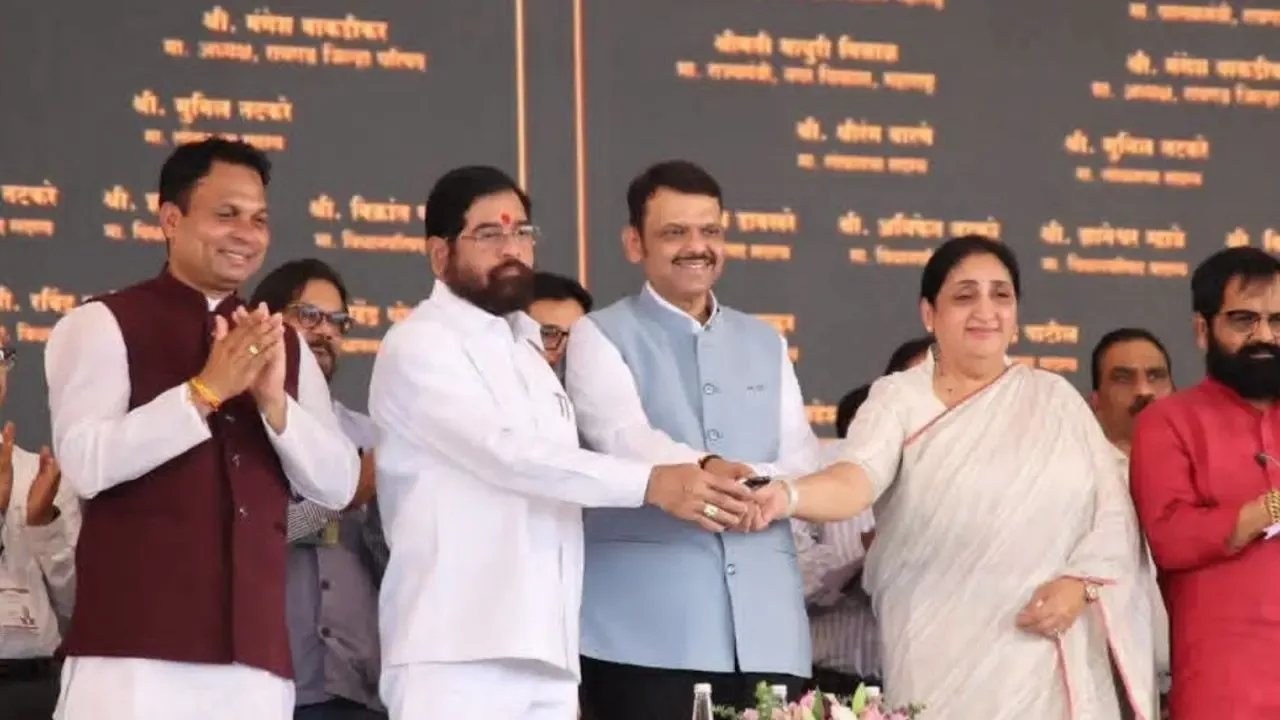
Maharashtra’s most concrete evening development is Sunday’s launch of works and landowner-related measures in the Navi Mumbai Airport Influence Notified Area, or NAINA. Loksatta’s October 25 account and Mid-day’s later report describe the Panvel programme attended by Devendra Fadnavis, Eknath Shinde and Sunetra Pawar. The reporting records infrastructure activity and property-card distribution, alongside promises to address pending landowner issues. This moves the story beyond an event preview, but does not establish that every affected family has received its final entitlement.
Loksatta places the programme near Shirdhon in Panvel and describes infrastructure groundbreaking and representative distribution of property cards to project-affected people from Nandgaon and Devad. Mid-day reports the inauguration of airport-connectivity roads and the Uran bypass, along with property-card distribution. These are distinct actions. Groundbreaking marks the beginning of work, inauguration concerns works presented as ready, and a representative document handover is narrower than proof that all land records have been settled.
The political message focused on trust and participation. Loksatta reports Fadnavis acknowledging the loss of trust associated with long-pending land issues and promising to resolve remaining questions. Mid-day reports Shinde’s assurance that landowners should be partners in development and receive appropriate facilities after giving up land. The desk attributes these commitments rather than adopting them as a completed settlement. A family’s position depends on its own record, allotment and applicable terms, not on the general optimism surrounding the airport region.
The reports also carry projections about jobs, urban growth and planned amenities. Those are promises and expectations. They do not establish that projected jobs already exist, that every proposed hub is operational or that long-term water needs have been resolved. The practical questions concern documented property rights, usable connections and the sequencing of everyday services. A development region’s future scale cannot substitute for evidence about what its current residents can access now.
A separate Maharashtra decision point is scheduled for Monday: Telangana’s chief minister is to meet Fadnavis over the proposed Tummidihatti barrage, according to The Hindu and Hyderabad Mail. This is an interstate negotiation to watch, not a water agreement already concluded. Together, the stories put land and water consent beside the language of growth. Tonight’s verified advance is the Panvel event and its documented actions; the next stage requires wider implementation records and any actual outcome from the planned meeting. Neither story warrants a claim that all outstanding disputes have disappeared. These distinctions keep separate actions from being presented as one completed settlement.
Strategies and tactics: the evidence
Analysis by the Pulse deskThe October 25 Loksatta and Mid-day accounts show an infrastructure event combining property-card handovers with explicit assurances about participation and trust. Interpreting this as an effort to rebuild consent is reasonable, but success cannot be inferred from the ceremony or leaders’ joint appearance.
An ordinary implementation milestone is a serious alternative to a wider political explanation. The consent interpretation would weaken if household records contradicted the assurances and strengthen if allotments, facilities and grievance resolution became verifiable. The interstate meeting is separate, not proof of coordination. Which household-level records will show whether promises change lived conditions?
What to watch
- Village-level property records and grievances.
- Completed roads versus newly started works.
- Written outcome of Monday’s water meeting.
Your take
Do you agree with the Pulse view?
Sources
- Loksatta — October 25 NAINA event Loksatta
- Mid-day — October 25 landowner assurances Mid-day
- The Hindu — October 26 barrage talks preview The Hindu
- Hyderabad Mail — October 26 barrage talks preview Hyderabad Mail
This piece is analysis written only from the published reports listed above. Pan India Pulse does no original reporting. How this site works