Politics
Morning Pulse: Revanth reaches Mumbai for today’s Tummidihatti barrage talks
Telangana seeks agreement on barrage height; Maharashtra’s land and submergence concerns remain part of the negotiation.
Pan India Pulse deskBased on reports from The Times of India, ANI / Lokmat Times, Deccan Chronicleతెలుగులో చదవండి

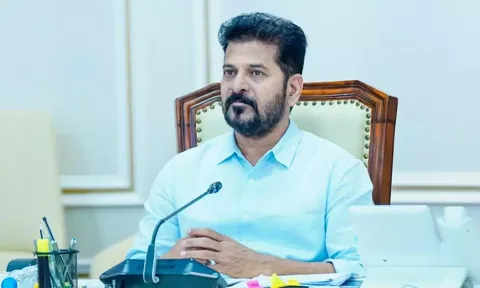
Telangana Chief Minister A. Revanth Reddy reached Mumbai on Sunday evening for talks with Maharashtra Chief Minister Devendra Fadnavis over the proposed Tummidihatti barrage. The meeting is scheduled for Monday at the Sahyadri State Guest House. The Times of India’s late Sunday report and a separate ANI account carried by Lokmat Times confirm the visit and agenda. Yesterday’s expected meeting has moved to the delegation’s arrival; there is no inspected agreement or completed meeting outcome at this morning’s publication.
The central choice concerns the proposed barrage’s Full Reservoir Level. The 2016 interstate understanding set a level of 148 metres, while Telangana is seeking 152 metres and exploring whether 150 metres could secure agreement. Telangana argues that the lower level would not divert the required water by gravity and would increase dependence on pumping. Irrigation Minister N. Uttam Kumar Reddy and senior officials are part of the delegation. An engineering preference still requires the neighbouring state’s consent on the interstate effects.
The Times of India reports Telangana’s estimate that about 2,300 acres would be submerged at 152 metres, compared with less than 1,000 acres at 150 metres. Those are the proposing state’s estimates, not independently established land-acquisition awards. The difference helps explain why a small change in reservoir level can carry a substantial local consequence. Maharashtra’s affected landholders and environmental concerns are part of the decision, alongside Telangana’s anticipated irrigation and drinking-water gains.
There is a documented sequence before the leaders’ meeting. Deccan Chronicle’s October 24 report records a May 26 request to Fadnavis and later approaches to the Union government. It also reports a Central Water Commission meeting on September 1. The Times of India describes technical reports and contour maps being shared with Maharashtra’s Water Resources Department on September 3. These dated steps show a proposal moving through correspondence, technical discussion and a chief-minister-level meeting. They do not establish that every technical concern has been resolved.
Telangana says the revived project would serve northern districts, including irrigation needs in Adilabad. The current proposal draws on the Pranahita-Chevella project’s history and dispute over barrage height. The useful question today is the level and process the two states can actually agree upon. A statement welcoming further discussion would carry a different meaning from written consent to a specified level, a joint technical study or a binding arrangement on land and compensation.
The irrigation proposal has a longer history than today’s meeting. The Times of India says the state originally envisaged a 152-metre level in 2007, before the 2016 understanding fixed 148 metres. Deccan Chronicle reports the current government’s argument that pumping from the lower level would raise electricity costs. The reported choice between 150 and 152 metres therefore concerns operating requirements as well as additional land effects. A joint technical account would allow both sides’ assumptions to be compared rather than treating Telangana’s preferred level as already accepted.
The morning’s reporting therefore follows two public records: the outcome of the interstate meeting, when it occurs, and the next district weather advisories before Tuesday and Wednesday. Neither the proposed barrage’s irrigation benefits nor the forecasts should be converted into completed outcomes. If the leaders agree only to further technical work, that is the development to report. If they specify a reservoir level or a consent process, the document and Maharashtra’s response will matter more than a ceremonial description of the visit.
Political Alignment Lens
Article framing only. This does not establish publisher affiliation, reader beliefs or voting intent.
Pulse view
Analysis by the Pulse deskThe move from letters and technical meetings to direct talks is consistent with negotiating the trade-off between gravity diversion and additional submergence. That is an interpretation of a documented sequence, not evidence of secret bargaining or a prearranged result. A routine technical-consent process is a serious alternative explanation.
A jointly published level, study mandate and land-impact account would show whether the outstanding choices have narrowed. A deferral or technical findings rejecting the assumptions would weaken that interpretation. Can both governments explain consequences for landholders as clearly as expected benefits for water users?
Strategies and tactics: the evidence
Our signature analysis has its own dedicated page, with the event sequence, source evidence, alternatives and historical comparisons.
Read the full strategy analysisWhat could happen next
Conditional scenarios based on current reporting, not confirmed plans or election forecasts.
If Maharashtra accepts a level or defined consent process, the next step can be specified in a joint record.
The delegation arrived to discuss the difference between 148 metres and the higher proposal.
Watch for: A dated statement identifying the level and remaining conditions. Reporting behind this scenario
If land or technical concerns remain unresolved, further study may follow.
Reported submergence estimates differ substantially between 150 and 152 metres.
Watch for: A joint technical-study mandate or explicit deferral. Reporting behind this scenario
What to watch
- The state accounts after today’s Mumbai meeting.
- Any specified reservoir level, technical study and land-impact conditions.
- The joint technical record on operating costs and submergence.
Your take
Do you agree with the Pulse view?
Sources
- Revanth travels to Mumbai for barrage-height talks The Times of India
- Delegation arrives for Tummidihatti talks ANI / Lokmat Times
- Earlier correspondence and technical-consent sequence Deccan Chronicle
This piece is analysis written only from the published reports listed above. Pan India Pulse does no original reporting. How this site works