Politics
Evening Pulse: Thackeray turns the Dussehra stage into a test of prevention
At Shivaji Park, the UBT leader used the Tiger Shroff attack to challenge the government on security. His speech adds a political argument, not a judicial finding.
Pan India Pulse deskBased on reports from Loksatta, Mid-dayमराठीत वाचा
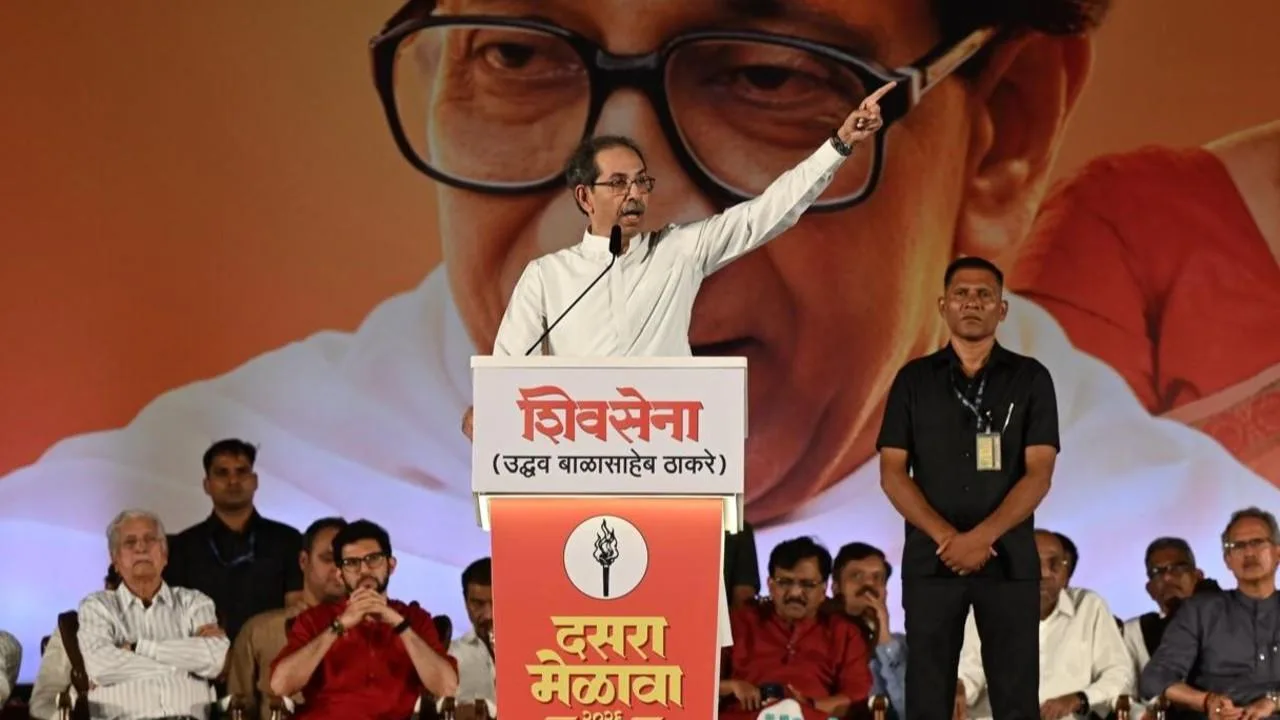
Maharashtra’s Dussehra politics has moved from rally preparations to a direct challenge over policing. Loksatta and Mid-day report Uddhav Thackeray’s Shivaji Park address on Tuesday evening. The Shiv Sena (UBT) leader used the attack on actor Tiger Shroff to question the state government and Chief Minister Devendra Fadnavis. Since yesterday’s Pulse on the suspects caught in Kota, the new development is how the opposition is framing that operational success against the question of preventing the attack in the first place.
Loksatta reports that Thackeray acknowledged the attackers had been caught but asked what such action would mean if the victim had suffered worse harm. This is his political argument about prevention and accountability. It does not erase the arrests or establish that a particular preventive step would certainly have stopped the incident. The distinction is important: identifying suspects after an attack and preventing violence are related responsibilities, but evidence about one does not automatically settle the other.
Both outlets also report his challenge to Fadnavis concerning Lawrence Bishnoi, who is held in Gujarat’s Sabarmati jail. Thackeray urged action to bring him to Maharashtra. These are the opposition leader’s demands and allegations about the government’s response. They are not proof of who directed the shooting, nor a court order authorising a transfer. This edition does not convert a speech into an investigative finding or attach guilt to a person on the basis of the rally’s rhetoric.
Mid-day places the speech in a wider set of criticisms about farmers’ distress, law and order and youth protests. That shows the opposition trying to connect a prominent security incident with broader questions about governance. A rally can make those priorities visible without supplying the evidence needed to resolve each one. Specific claims about losses, police conduct or criminal direction would require separate verification. This Pulse therefore reports the speech’s documented political focus without importing unsupported figures or treating every assertion as independently established.
For the government, the arrests reported yesterday remain a concrete action it can point to. For Thackeray, the argument is that action after violence cannot be the whole measure of public safety. The evening sources reviewed do not provide a direct new Fadnavis response to the specific challenge. We do not invent one or use an older assurance as if it answered tonight’s remarks. A further government statement, a court development or new evidence from investigators would be a separate update.
The next stage is therefore more demanding than matching the volume of rival speeches. Investigators need to establish the alleged roles and instructions behind the attack; political leaders need to explain what prevention should mean in practice. Yesterday’s arrests and tonight’s criticism belong in the same account, but should retain their different evidential status. One is a reported police action, the other a contest over its meaning. Neither alone tells readers whether the wider security problem has been solved.
Political Alignment Lens
Article framing only. This does not establish publisher affiliation, reader beliefs or voting intent.
Pulse view
Analysis by the Pulse deskThackeray’s distinction between prevention and detection is a legitimate accountability question. The government can also fairly point to an investigation that has produced suspects. A useful debate would examine both responsibilities instead of treating success in one as proof that the other no longer needs scrutiny.
The risk of the rally format is that a named adversary becomes a substitute for a specific remedy. Credible proposals should explain what police powers, oversight or threat-response changes are required. What would persuade residents that prevention has improved, beyond either another arrest or another forceful speech?
What to watch
- A direct government response to the specific rally challenge
- Verified evidence about the attack’s alleged direction
- Concrete prevention proposals and investigative or court developments
Your take
Do you agree with the Pulse view?