Politics
Evening Pulse: Congress retains Nagpur as MVA takes three of five council seats
Abhijeet Wanjari’s result completes a split verdict: the opposition wins graduate seats while Mahayuti takes the two teachers’ seats.
Pan India Pulse deskBased on reports from PTI / ThePrint, India Todayमराठीत वाचा
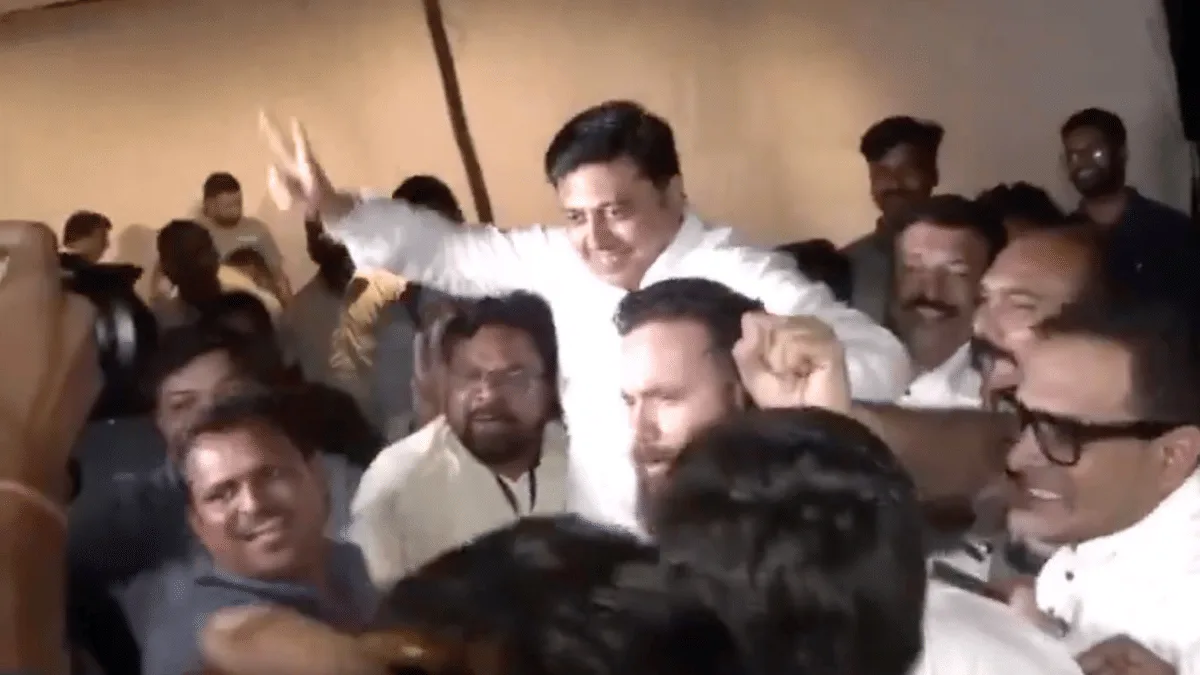
Congress candidate Abhijeet Wanjari retained the Nagpur Division Graduates’ Legislative Council seat, taking the opposition Maha Vikas Aghadi to three of the five seats contested in Maharashtra. PTI’s October29 report through ThePrint and India Today’s report corroborate the result and the alliance split. The ruling Mahayuti won two seats.
PTI reports that Wanjari defeated BJP candidate Sudhakar Kohale by 3,271 votes after counting that continued for more than 40 hours. It gives Wanjari 67,231 votes and Kohale 63,960. Nagpur was closely watched because Chief Minister Devendra Fadnavis and Union minister Nitin Gadkari had campaigned for the BJP candidate. The political prominence of a constituency does not change the limited electorate involved.
The MVA won the three graduate constituencies: Congress retained Nagpur, while NCP (Sharadchandra Pawar) won Pune and Chhatrapati Sambhajinagar. BJP won the Pune teachers’ seat and Shiv Sena won Amravati teachers. India Today independently describes that division. The result therefore contains successes for both alliances, alongside a clear opposition advantage in the graduate contests.
Congress used the Nagpur outcome to challenge earlier BJP messaging about its performance. PTI records a dispute over premature claims and a deleted social-media post. That sequence illustrates the risk of announcing an aggregate political verdict before all results are complete. It does not establish that every mistaken early claim was deliberately deceptive; incomplete information and campaign haste are alternative explanations.
India Today places the results in the context of friction among Mahayuti partners over seat sharing. Such disagreements can matter for candidate support, but the reports do not isolate a single cause for the Nagpur margin or prove that a coalition breakdown will follow. Party reviews, candidate accounts and constituency-level evidence are needed before turning a five-seat result into a general explanation of Maharashtra politics.
The Pune results also show why alliance totals should be read alongside constituency type. A graduate-seat victory and a teachers’ victory arise from different voter groups, even within the same division. The statewide three-to-two tally is accurate for these five contests, but it is not a statewide popular-vote percentage or a complete measure of each partner’s organisational strength.
ThePrint’s PTI account reports that NCP leader Praful Patel called for a review of priorities and organisation after the party’s candidate lost. That is an attributable response inside the ruling alliance. A review can produce changes, but announcing one does not tell readers what those changes will be or whether other partners have agreed to them.
The result also distinguishes retention from a new capture. Wanjari was the sitting Nagpur member, so Congress retained the seat even though the constituency has a longer association with BJP leadership. Both descriptions can be true: a historically significant BJP arena and an incumbent Congress victory. Stating the distinction avoids presenting a retention as though the seat had just changed hands from the ruling party.
Political Alignment Lens
Article framing only. This does not establish publisher affiliation, reader beliefs or voting intent.
Pulse view
Analysis by the Pulse deskStrategies and tactics: the evidence. The opposition’s use of Nagpur’s symbolism is visible in its response to the final result. The more specific lesson is about sequencing: campaign totals issued before counting ends can be overtaken by the record. A rival interpretation is ordinary post-result point-scoring, rather than a durable change in alliance strategy.
Subsequent joint campaigning and seat agreements would help show whether reported ruling-coalition friction persists. Cooperation would disconfirm a prediction of an inevitable rupture. What should the parties disclose from their reviews to explain the graduate and teachers’ results more usefully?
Strategies and tactics: the evidence
Our signature analysis has its own dedicated page, with the event sequence, source evidence, alternatives and historical comparisons.
Read the full strategy analysisWhat to watch
- Final constituency records and party reviews.
- Mahayuti partners’ decisions on future candidate selection.
- The new members’ priorities for graduates and teachers.
Your take
Do you agree with the Pulse view?
Sources
- Nagpur result and Maharashtra seat breakdown PTI / ThePrint
- MVA three, Mahayuti two India Today
This piece is analysis written only from the published reports listed above. Pan India Pulse does no original reporting. How this site works