Politics
Morning Pulse: Fadnavis and the Thackeray cousins share a Mumbai cartoon-book stage
The public exchange is documented; speculation about an alliance goes beyond the evidence inspected for this edition.
Pan India Pulse deskBased on reports from Hindustan Times, Gujarat Samacharमराठीत वाचा
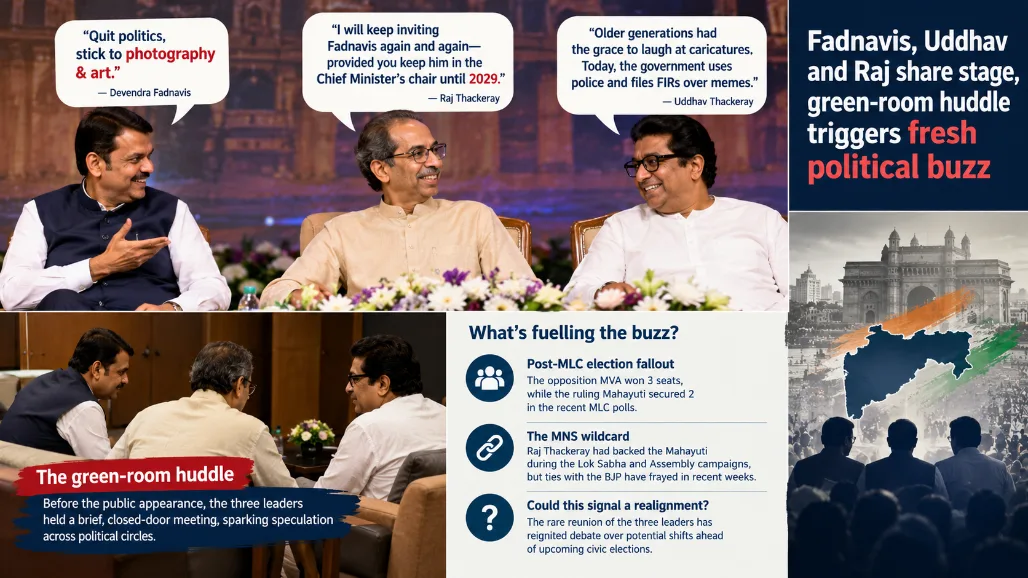
Devendra Fadnavis shared a Mumbai stage with Uddhav Thackeray and Raj Thackeray at a book event celebrating Marathi cartoons. Hindustan Times and Gujarat Samachar independently report the gathering at the Savarkar auditorium in Dadar. The public appearance brought political rivals into the same cultural setting, where exchanges about photography, cartooning and politics drew attention. It supplies evidence of a shared event, rather than evidence that their parties have negotiated a new alliance.
Hindustan Times identifies the occasion as the release of a collection edited by political and social satirist Prashant Kulkarni, covering a century of Marathi cartooning. Cultural affairs minister Ashish Shelar was also present. The accounts use different English renderings of the book’s name and differ on the event’s day. This Pulse retains the corroborated participants, venue and purpose, while leaving the disputed dating and exact translated banter out of its factual account.
The exchange itself concerned the Thackeray cousins’ artistic backgrounds and Fadnavis’s political role. Hindustan Times reports that Uddhav responded by defending the political force of a cartoonist’s brush, while Raj joined the banter about the chief minister’s position. Gujarat Samachar describes the same broad encounter but gives different wording for several lines. Without an inspected original recording, this edition paraphrases the topic and carries no exact quotation from the stage.
Fadnavis also discussed an art gallery for Marathi cartoonists, according to Hindustan Times. That announcement belongs to the cultural-policy part of the story and needs its own follow-up: an order, location, funding and opening schedule. A promise made during a literary function can be politically interesting without already amounting to a funded project. The public gallery proposal offers a concrete subject to track beyond the photographs of rival leaders appearing together.
The gathering follows the Legislative Council results covered in yesterday’s Maharashtra Pulse. The new element today is this cross-party public appearance and the debate about how to interpret it. A photograph can demonstrate who occupied the stage; it cannot establish what was agreed in private. Gujarat Samachar discusses a green-room interaction and political speculation, but the inspected accounts do not supply a verified agreement, seat arrangement or joint policy announcement emerging from it.
For Maharashtra readers, the distinction matters because public civility and electoral competition can coexist. Leaders may share a cultural platform, exchange barbs and remain opponents on policy and elections. One serious explanation for this event is simply the common Marathi cultural setting and the book’s subject. Any interpretation involving strategic signalling would need a subsequent attributable action to support it. This edition keeps the story at the level of the documented appearance, the cultural announcement and the responses reported from the stage, rather than converting proximity into a claim about coalition negotiations.
Political Alignment Lens
Article framing only. This does not establish publisher affiliation, reader beliefs or voting intent.
Pulse view
Analysis by the Pulse deskA shared stage is news when rivals rarely appear together, but it remains a narrow piece of evidence. The cultural occasion explains the invitation and offers a substantial alternative to the claim that the appearance signals an impending political realignment.
If a gallery proposal produces a government order, it becomes a trackable public commitment. If the parties later announce formal talks, that would provide new evidence about political relations. Until then, what should coverage prioritise: the cultural-policy promise or the political remarks that surrounded it?
What could happen next
Conditional scenarios based on current reporting, not confirmed plans or election forecasts.
If the gallery announcement is followed by a government order, it can be assessed as a cultural-policy commitment.
Hindustan Times reports Fadnavis’s assurance at the cartoon-book event.
Watch for: A published location, funding decision and implementation schedule. Reporting behind this scenario
What to watch
- Any government order or budget for the proposed cartoonists’ gallery.
- Attributable party announcements about future joint activity.
- Substantive responses to the council results beyond stage speculation.
Your take
Do you agree with the Pulse view?
Sources
- Mumbai book event and participants’ exchanges Hindustan Times
- Shared cultural stage and political speculation Gujarat Samachar
This piece is analysis written only from the published reports listed above. Pan India Pulse does no original reporting. How this site works